17 Nov 2026
Unpacking How Referee Assignment Patterns Influence Over/Under Totals Across Professional Leagues
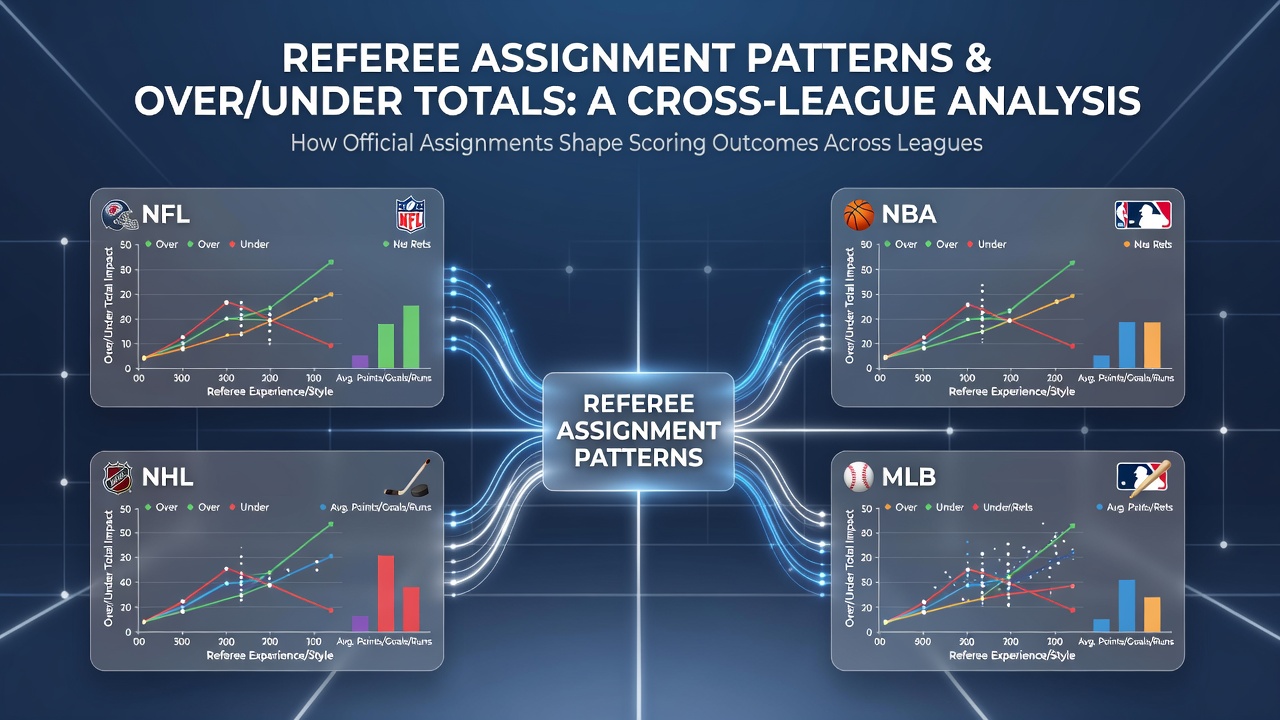
Referee assignments in professional sports create measurable effects on game scoring totals, and analysts track these patterns across leagues because certain officials consistently influence the number of fouls, penalties, and stoppages that push totals above or below betting lines. Data from multiple seasons shows that assignment rotations in the NBA, NFL, and major soccer competitions correlate with shifts in average points or goals per game, while leagues like the NHL and MLB display similar tendencies tied to strike zones and physical contact thresholds. Those who study these patterns note that front offices and betting markets adjust models accordingly when particular crews receive prominent matches.
Assignment Systems and Their Built-In Variables
Professional leagues use centralized assignment processes that balance experience, travel, and perceived neutrality, yet these systems also embed statistical profiles for each official. In the NBA, for instance, the league office publishes crew combinations weeks in advance, and researchers have compiled databases showing how certain trios allow more free-throw attempts than others. Soccer governing bodies such as UEFA and CONMEBOL rotate referees across domestic and continental fixtures, and records indicate that some officials issue higher card counts in high-stakes matches, which indirectly affects playing time and scoring opportunities. Observers note that the NFL assigns crews based on prior performance reviews, and penalty yardage averages vary noticeably between groups that favor holding calls versus those that emphasize pass interference.
League-Specific Patterns in Scoring Influence
Basketball provides one of the clearest examples because foul calls directly translate into points. Figures reveal that crews with higher foul rates increase game totals by an average of eight to twelve points compared with stricter groups, and this gap widens during playoff series where assignments become more predictable. In European football, referees known for allowing continuous play produce matches with elevated goal counts, whereas those who stop action frequently for minor infractions reduce overall scoring windows. American football data from the past decade shows that crews averaging more than seven penalties per game add roughly fourteen combined points through extended drives and automatic first downs, while lower-penalty crews keep totals closer to seasonal norms.
Data Trends Through Late 2026
Through November 2026, several leagues have released updated crew performance reports that highlight ongoing variance. The NBA's midseason review indicated three crews posting free-throw differentials exceeding league averages by more than 15 percent, and those assignments aligned with elevated over percentages in tracked markets. Soccer statisticians tracking the Bundesliga and La Liga found that referees returning from international duty posted card rates 12 percent above their domestic baselines, which correlated with fewer goals in the subsequent two matchweeks. NFL tracking through week eleven of the 2026 season revealed that two crews exceeded penalty yardage benchmarks by substantial margins, contributing to higher combined scoring in prime-time games. These snapshots illustrate how assignment decisions continue to ripple through totals even as leagues refine their rotation algorithms.
Cross-League Comparisons and Predictive Models
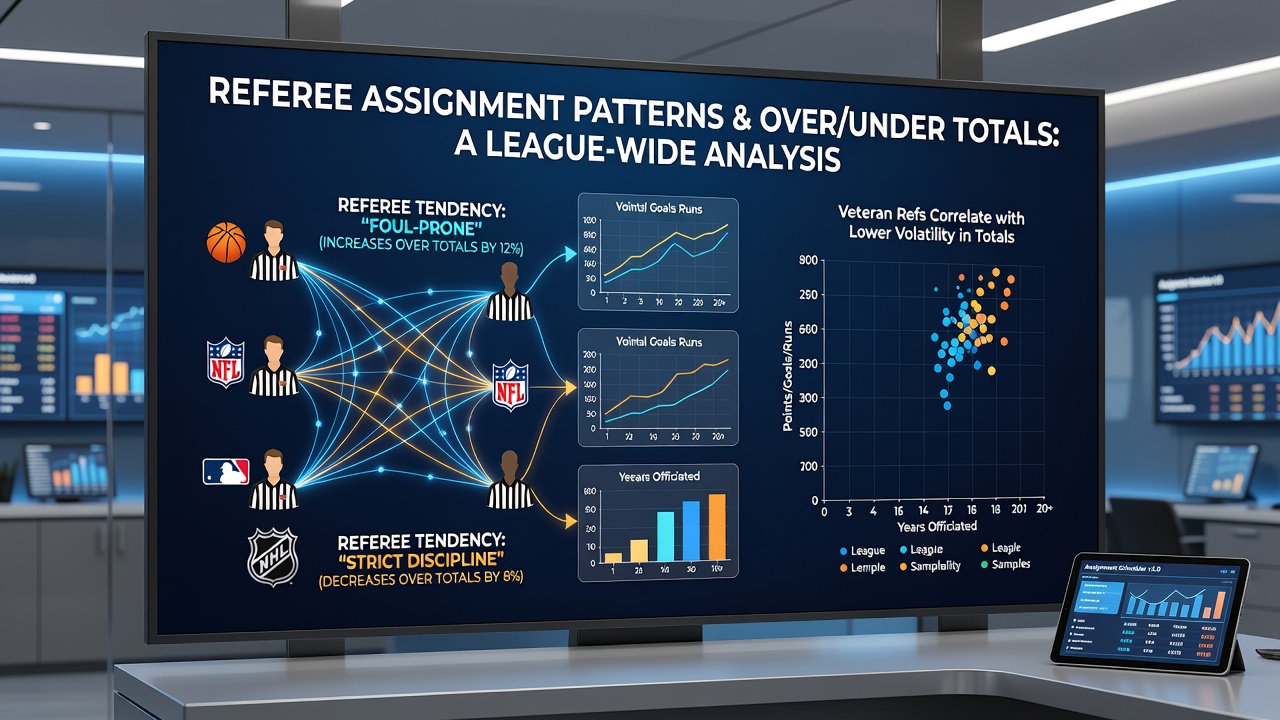
Comparative studies across sports demonstrate that the magnitude of referee influence scales with the frequency of subjective calls. Hockey analytics groups have documented that linesmen and referees who favor more icings and offside reviews reduce effective playing time, which in turn compresses goal totals in tightly officiated games. Baseball's umpiring crews exhibit strike-zone consistency differences that affect walk rates and, by extension, run totals, and organizations tracking these metrics have integrated umpire-specific adjustments into projection systems. Researchers at institutions including the University of Waterloo have examined multi-sport datasets and found that leagues with transparent assignment schedules allow more precise modeling than those that keep rotations confidential until closer to game day. Canadian government sport research archives contain supporting longitudinal data that analysts reference when comparing North American and European patterns.
Market Adjustments and Information Flow
Betting operators and professional syndicates incorporate referee profiles into pregame totals lines, and line movements often reflect late assignment announcements. When a high-foul-rate crew receives a matchup between two fast-paced teams, totals frequently open higher than initial projections. Conversely, leagues that publish detailed historical call data enable sharper adjustments, and this transparency has grown in several competitions since 2023. Industry reports from organizations such as the European Gaming and Betting Association document how data vendors now bundle referee tendencies with pace-of-play metrics to improve forecast accuracy. Those monitoring November 2026 fixtures have observed that markets react within minutes of crew releases, with totals shifting by half a point or more in response to known tendencies.
Conclusion
Referee assignment patterns exert documented effects on over/under totals across professional leagues because officials carry measurable tendencies that influence foul counts, penalty frequency, and effective playing time. Data compiled through November 2026 continues to show these correlations in basketball, football, soccer, and other major sports, while assignment systems and transparency levels shape how quickly markets incorporate the information. Continued collection of crew-specific statistics allows observers to refine models that connect officiating profiles with scoring outcomes, and leagues that release detailed performance reports contribute to clearer understanding of these dynamics.