8 Sep 2026
Tracing the Development of Betting Regulations Through Key Historical Events
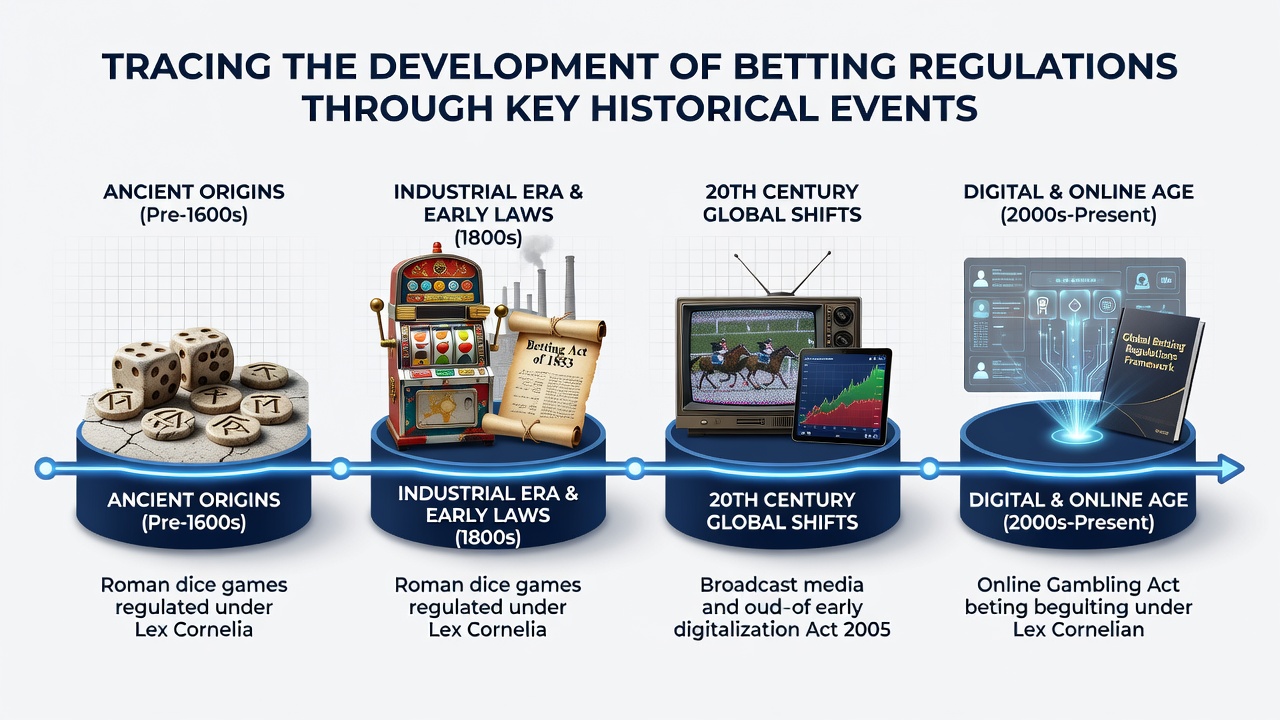
Betting regulations emerged alongside organized wagering in ancient civilizations, where rulers imposed controls to manage revenue streams and maintain social order, and these early measures set precedents that evolved over centuries into structured legal frameworks across multiple continents.
Ancient Foundations and Medieval Constraints
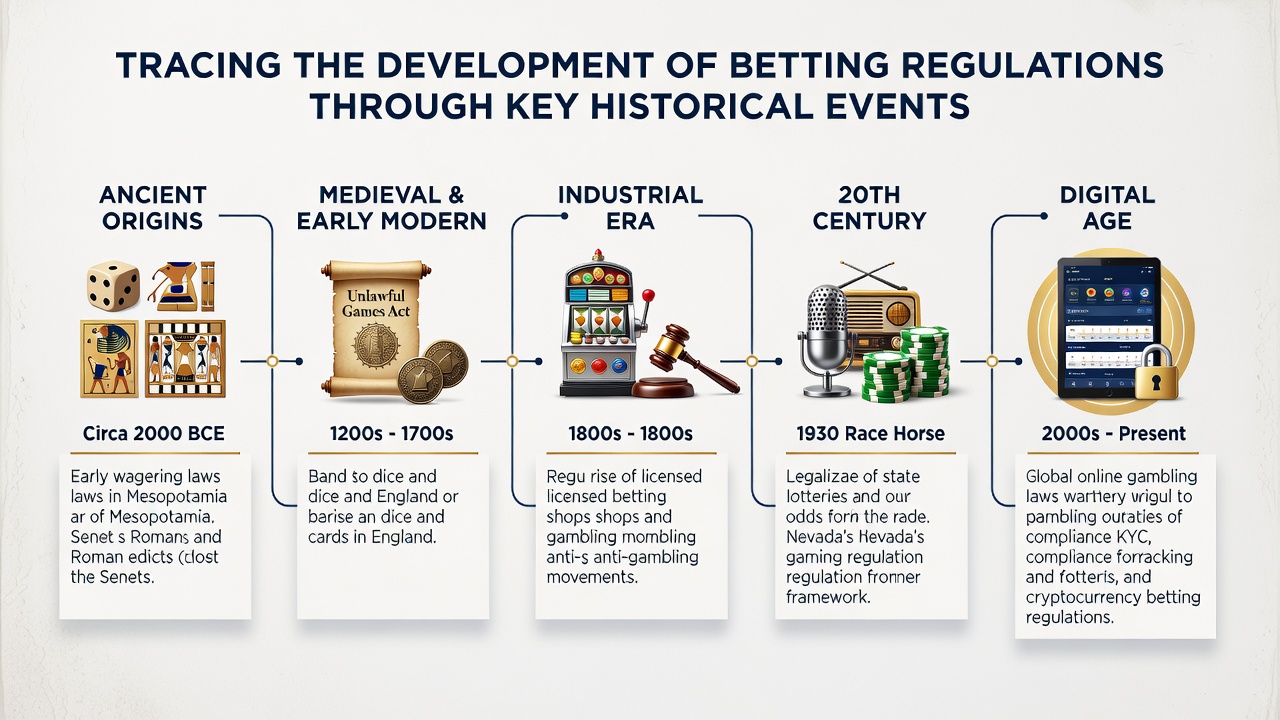
Historians document that Roman authorities taxed betting activities during public games while prohibiting certain forms of private wagers, and similar patterns appeared in Chinese dynasties where state monopolies on lotteries funded infrastructure projects, yet enforcement remained inconsistent because local officials often overlooked violations for personal gain.
Medieval European monarchs introduced licensing systems for dice games and tournaments, and these rules reflected efforts to curb fraud while directing profits toward royal treasuries, whereas religious institutions simultaneously condemned gambling as morally corrosive, which created ongoing tensions between secular and ecclesiastical authorities.
Industrial Era Transformations
During the 19th century, rapid urbanization prompted governments in the United States and parts of Europe to enact anti-gambling statutes aimed at protecting working populations from financial ruin, and data from that period shows a surge in illegal betting operations that operated despite police raids, since demand persisted among factory workers seeking quick income supplements.
The state of Nevada legalized casino gambling in 1931 amid economic pressures from the Great Depression, and this decision marked a pivotal shift because it generated tax revenue that supported public services, while neighboring jurisdictions maintained bans that pushed activity underground until similar reforms gained traction decades later.
Postwar Expansion and International Divergence
After World War II, countries such as Australia established state-run lotteries and betting agencies to finance postwar reconstruction, and government reports from that era indicate steady revenue growth that encouraged further liberalization in provinces like New South Wales, whereas many Asian nations retained strict prohibitions rooted in cultural traditions.
Canada amended its criminal code in 1969 to permit lotteries under provincial oversight, and subsequent court rulings clarified the boundaries between legal and illegal operations, which allowed provinces to develop distinct regulatory models that balanced consumer access with harm reduction measures.
Digital Age Milestones
The rise of internet-based platforms in the late 1990s forced regulators to confront cross-border challenges, and the United States passed the Unlawful Internet Gambling Enforcement Act in 2006 to restrict financial transactions tied to online betting, whereas the European Union pursued harmonization efforts through directives that required member states to license operators meeting consumer protection standards.
Australian authorities introduced the Interactive Gambling Act in 2001, and updates to this framework in following years addressed offshore operators by blocking access and imposing fines, while research from the Australian Institute of Criminology highlights how these measures reduced participation rates among certain demographics without eliminating the market entirely.
Canadian provinces expanded online offerings after 2010 through regulated sites, and figures from Justice Canada show increased tax collections that funded addiction treatment programs, since policymakers recognized the need to integrate harm minimization into licensing conditions.
Contemporary Developments and Future Outlook
Multiple jurisdictions revisited their approaches in the 2020s as mobile technology expanded access, and regulatory bodies in several U.S. states launched licensing programs following the 2018 Supreme Court decision that overturned the federal sports betting ban, which produced measurable increases in legal market share according to state revenue data.
International cooperation intensified through forums such as the International Association of Gaming Regulators, and participants shared best practices on responsible gambling tools while addressing money laundering risks that span national borders, since fragmented rules created enforcement gaps that operators sometimes exploited.
Observers note that discussions scheduled for September 2026 in international forums will address emerging issues in online betting, including cryptocurrency integration and artificial intelligence-driven risk assessment, and these conversations build on prior agreements that already shaped licensing criteria in multiple regions.
Conclusion
Key historical events demonstrate that betting regulations developed through cycles of prohibition, taxation, and controlled liberalization as societies responded to economic needs, technological changes, and public safety concerns, and the resulting patchwork of rules continues to adapt because new platforms and player behaviors require ongoing policy adjustments.